What Should Cholesterol Levels Be? LDL, HDL & Triglycerides
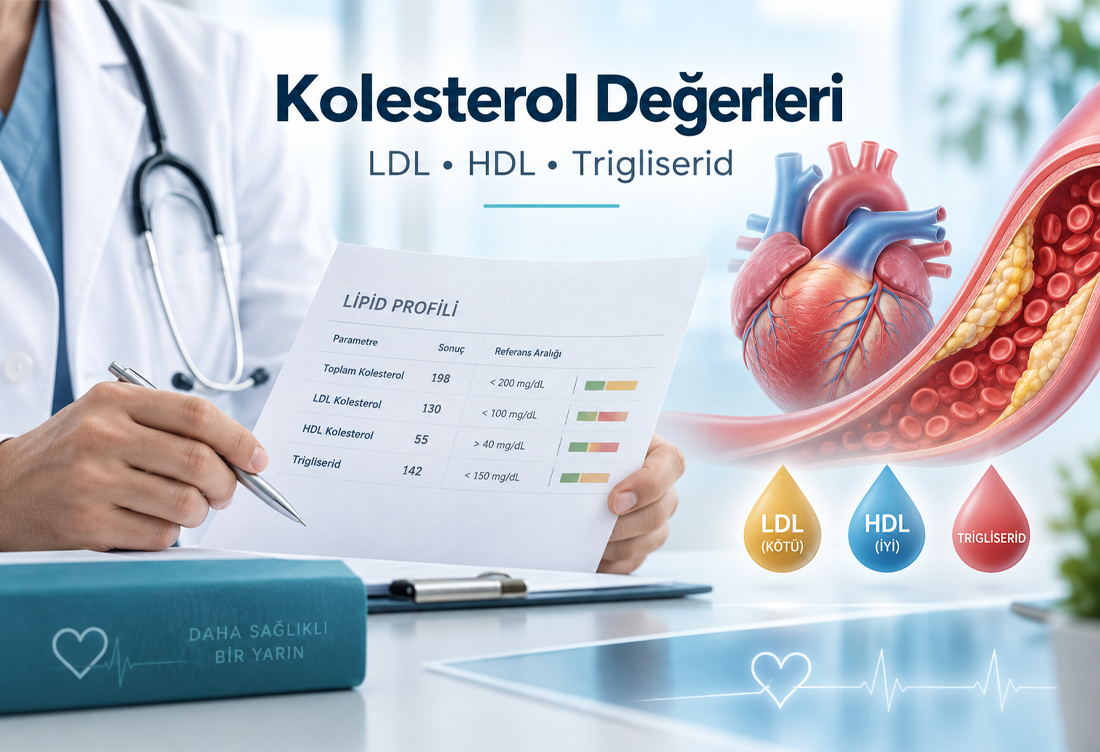
When evaluating cholesterol results, looking only at total cholesterol is not enough. LDL cholesterol, HDL cholesterol and triglyceride levels should be assessed together. In general, an LDL cholesterol level below 100 mg/dL, total cholesterol below 200 mg/dL and triglycerides below 150 mg/dL are considered favorable. For HDL cholesterol, low levels are particularly important in cardiovascular risk assessment.
However, there is no single LDL target that applies to everyone. The appropriate LDL goal depends on a person’s cardiovascular risk. Someone who has previously had a heart attack, has coronary artery disease or is at very high cardiovascular risk may need a much lower LDL level than a low-risk person without known cardiovascular disease. Therefore, a value appearing within the laboratory reference range does not necessarily mean that it is the ideal treatment target for that individual. Current European recommendations also continue to base the intensity of LDL-lowering treatment on overall cardiovascular risk.
What Is Cholesterol?
Cholesterol is a fat-like substance that the body naturally needs. It is part of cell membranes, contributes to the production of certain hormones and plays a role in several metabolic processes. Therefore, the presence of cholesterol itself is not a disease.
Problems may arise when cholesterol carried by certain lipoproteins, particularly LDL, remains elevated over a long period of time. LDL particles circulating in the blood may enter the arterial wall and contribute to the gradual development of atherosclerotic plaque. This process plays an important role in conditions such as coronary artery disease, heart attack, stroke and peripheral artery disease.
Because cholesterol cannot travel through the bloodstream on its own, it is transported by structures called lipoproteins. This is why laboratory reports assess not only “cholesterol” but also LDL, HDL and other lipid measurements separately.
Which Values Are Measured in a Cholesterol Test?
A standard lipid profile usually includes total cholesterol, LDL cholesterol, HDL cholesterol and triglycerides. Some laboratory reports may also include non-HDL cholesterol or VLDL.
LDL cholesterol is one of the lipid parameters most strongly associated with the development of atherosclerosis. The higher the LDL level remains over time, the greater the potential for cholesterol to accumulate within artery walls.
HDL cholesterol has a different role in cholesterol transport. Low HDL levels may be associated with increased cardiovascular risk, but simply raising HDL does not eliminate cardiovascular risk.
Triglycerides are a type of fat used by the body to store energy. Elevated triglycerides may be associated with excess body weight, insulin resistance, diabetes, excessive alcohol intake, high-calorie diets and certain genetic conditions.
Total cholesterol reflects the overall amount of cholesterol carried in different lipoproteins. However, total cholesterol alone is not sufficient to determine a person’s cardiovascular risk.
What Should Cholesterol Levels Be?
The approximate values commonly used for general adult assessment are:
| Measurement | General Reference |
|---|---|
| Total cholesterol | Below 200 mg/dL |
| LDL cholesterol | Below 100 mg/dL |
| HDL cholesterol | Above 40 mg/dL in men |
| HDL cholesterol | Above 50 mg/dL in women |
| Triglycerides | Below 150 mg/dL |
These values provide a general framework. When determining an individual LDL target, factors such as age, smoking, blood pressure, diabetes, kidney disease, family history and whether the person has already developed cardiovascular disease should also be considered.
For example, an LDL level around 100 mg/dL may be acceptable for a person at low cardiovascular risk, while the same level may be considered above target in someone who has already had a heart attack. In current European cardiovascular risk-based approaches, an LDL level below 55 mg/dL may be targeted in people at very high risk, together with at least a 50% reduction from the starting LDL level. In high-risk patients, an LDL target below 70 mg/dL may be used.
What Is LDL Cholesterol?
LDL stands for “low-density lipoprotein.” It carries cholesterol from the liver to different tissues throughout the body. LDL is a natural part of normal metabolism, but an excessive number of LDL particles in the bloodstream can make cholesterol accumulation within artery walls more likely over time.
This process is known as atherosclerosis. Atherosclerotic plaques can gradually enlarge and narrow coronary arteries. If the surface of a plaque suddenly ruptures or becomes unstable, a blood clot may form and completely block the artery, potentially causing a heart attack.
For this reason, LDL is not simply a number on a laboratory report. It is one of the most important modifiable risk factors in the prevention of cardiovascular disease.
What Should LDL Cholesterol Be?
In general, an LDL cholesterol level below 100 mg/dL is considered favorable. However, the appropriate target should be based on the person’s total cardiovascular risk.
As a general classification:
- Below 100 mg/dL: often considered favorable
- 130–159 mg/dL: borderline high
- 160–189 mg/dL: high
- 190 mg/dL or above: very high and requires further evaluation
These categories should not be used alone to determine treatment. For example, an LDL level of 75 mg/dL may be excellent for a low-risk person but still above the individual target for a patient who has already had a heart attack and is considered very high risk.
What Should LDL Be in People With Heart Disease?
People who have previously had a heart attack, have coronary artery disease, have undergone stent placement or have had bypass surgery generally carry a higher cardiovascular risk than the general population. Their LDL targets are therefore lower.
In very high-risk patients, current European recommendations may target an LDL cholesterol level below 55 mg/dL, together with at least a 50% reduction from the baseline level. In high-risk patients, an LDL level below 70 mg/dL may be targeted.
This means that an LDL level of 90 mg/dL in someone who has already had a heart attack may still be above the recommended target, even if the laboratory report does not flag it as markedly elevated.
What Does an LDL Level of 190 or Higher Mean?
An LDL cholesterol level of 190 mg/dL or above is considered markedly elevated and deserves careful evaluation. At this level, genetic causes should be considered in addition to lifestyle and dietary factors.
If LDL is very high at a young age and there is a family history of early heart attack, stent placement, bypass surgery or severe cholesterol elevation, familial hypercholesterolemia may be considered.
Familial hypercholesterolemia is an inherited condition that can cause LDL cholesterol to remain elevated from birth. If untreated, the lifetime exposure to high LDL increases and the risk of premature coronary artery disease may rise.
When LDL is 190 mg/dL or above, it is generally more appropriate to seek medical evaluation rather than relying only on dietary changes and self-monitoring.
Is an LDL Level of 130 High?
An LDL level of 130 mg/dL is generally considered above the optimal range. However, its clinical significance depends on the person’s overall cardiovascular risk.
An LDL level of 130 mg/dL in a young nonsmoker with normal blood pressure and no other major risk factors does not have the same meaning as the same LDL level in a person who has already had a heart attack. In the second situation, the value may be clearly above the individual treatment target.
For this reason, a single LDL value should not automatically lead to the conclusion that medication is necessary or that no treatment is needed.
Is an LDL Level of 150 High?
An LDL level of 150 mg/dL is generally considered borderline high. If it remains elevated over many years, it may contribute to the development of atherosclerosis, particularly when other cardiovascular risk factors are also present.
Age, smoking, blood pressure, diabetes, kidney function and family history should all be considered before deciding what the result means for that individual.
Is an LDL Level of 200 Dangerous?
An LDL level of 200 mg/dL is markedly elevated and should be medically evaluated. If this level is found at a young age, genetic lipid disorders such as familial hypercholesterolemia may need to be investigated.
A high LDL level does not mean that a person is having a heart attack at that moment. The main concern is that long-term exposure to very high LDL can increase the future risk of atherosclerotic cardiovascular disease.
What Is HDL Cholesterol?
HDL stands for “high-density lipoprotein.” It plays a different role from LDL in cholesterol metabolism and contributes to the transport of cholesterol from tissues back toward the liver.
For this reason, HDL has traditionally been called “good cholesterol.” However, cardiovascular risk assessment should not be based on HDL alone.
Low HDL may be associated with increased cardiovascular risk, but having high HDL does not cancel out the risks associated with high LDL or other cardiovascular risk factors.
What Should HDL Cholesterol Be?
In general, HDL above 40 mg/dL in men and above 50 mg/dL in women is considered favorable.
However, HDL should never be interpreted in isolation. For example, if someone has an HDL level of 70 mg/dL but an LDL level of 190 mg/dL, the higher HDL does not eliminate the cardiovascular risk associated with the elevated LDL.
Similarly, the idea that “the higher the HDL, the better” is not always correct. Extremely high HDL levels do not necessarily provide additional cardiovascular protection.
What Are Triglycerides?
Triglycerides are one of the main types of fat used by the body to store energy. Some of the energy from food that is not immediately used can be stored in the form of triglycerides.
Triglyceride levels can be influenced more strongly than LDL by diet, body weight, blood sugar and alcohol intake. Genetic factors, hypothyroidism, kidney disease and certain medications may also increase triglyceride levels.
What Should Triglyceride Levels Be?
In general, triglycerides below 150 mg/dL are considered favorable.
A commonly used classification is:
- Below 150 mg/dL: normal
- 150–199 mg/dL: borderline high
- 200–499 mg/dL: high
- 500 mg/dL or above: severely elevated
As triglyceride levels increase, cardiovascular risk becomes more important, and at very high levels the risk of acute pancreatitis also becomes a concern.
Is a Triglyceride Level of 300 High?
Yes. A triglyceride level of 300 mg/dL is considered high. Possible contributing factors such as excess body weight, high carbohydrate intake, alcohol use, diabetes, insulin resistance, thyroid disease and certain medications may need to be evaluated.
Interpretation can also depend on whether the blood sample was taken while fasting and on the person’s overall clinical condition.
What Happens if Triglycerides Are Above 500?
A triglyceride level of 500 mg/dL or higher is considered severe hypertriglyceridemia. At these levels, and particularly as the value rises further, the risk of acute pancreatitis becomes increasingly important.
For this reason, severe triglyceride elevation should not be viewed only as a “cholesterol problem.” The underlying cause should also be investigated.
What Should Total Cholesterol Be?
Total cholesterol is generally preferred to be below 200 mg/dL. However, total cholesterol alone can sometimes be misleading.
For example, two people may both have a total cholesterol level of 220 mg/dL. One may have relatively high HDL and lower LDL, while the other may have markedly elevated LDL. These two lipid profiles do not carry the same cardiovascular meaning.
Therefore, when total cholesterol is elevated, LDL, HDL and triglyceride values should also be reviewed.
What Is Non-HDL Cholesterol?
Non-HDL cholesterol is calculated by subtracting HDL cholesterol from total cholesterol:
Non-HDL cholesterol = Total cholesterol − HDL cholesterol
For example, if total cholesterol is 230 mg/dL and HDL is 50 mg/dL, non-HDL cholesterol is 180 mg/dL.
Non-HDL cholesterol includes LDL as well as other cholesterol-carrying lipoproteins that may contribute to atherosclerosis. It can provide additional information, particularly in some people with elevated triglycerides or metabolic disorders.
Why Does Cholesterol Increase?
High cholesterol is not caused only by eating fatty foods. The liver plays a central role in cholesterol metabolism, and genetics can significantly influence LDL levels.
Factors that may contribute to high cholesterol include:
- Genetic predisposition
- A diet high in saturated fat
- Trans fat intake
- Excess body weight
- Physical inactivity
- Diabetes
- Hypothyroidism
- Chronic kidney disease
- Certain liver disorders
- Certain medications
- Increasing age
When LDL is very high, being thin or eating well does not rule out a genetic cause.
Can Thin People Have High Cholesterol?
Yes. Having a normal body weight does not guarantee normal cholesterol levels.
In some people, genetics is the main reason for elevated LDL. Therefore, someone who is physically active, has a normal body weight and appears healthy may still have an LDL level of 160, 190 or even higher.
A family history of premature cardiovascular disease or very high cholesterol makes this particularly important to investigate.
Does High Cholesterol Cause Symptoms?
In most people, high cholesterol causes no symptoms. LDL cholesterol can remain elevated for years while a person feels completely well.
This is one reason cholesterol testing is important. Elevated cholesterol can be identified before symptoms occur, allowing long-term cardiovascular risk to be assessed.
Chest pain and shortness of breath are not direct “symptoms of high cholesterol.” If such symptoms are present, underlying cardiovascular disease or other causes should be evaluated separately.
How Can High Cholesterol Lead to a Heart Attack?
Elevated LDL levels can promote cholesterol accumulation within coronary artery walls over many years. This gradually leads to the development of atherosclerotic plaques.
A plaque may narrow the artery, reducing blood supply to the heart muscle. However, one of the common mechanisms of heart attack is the sudden disruption of a plaque surface, followed by the formation of a blood clot.
If the clot severely reduces or completely stops blood flow through a coronary artery, the affected heart muscle may become deprived of oxygen and a heart attack can occur.
Because this process usually develops over many years, the goal of cholesterol management is not simply to improve today’s laboratory result but to reduce lifelong atherosclerotic burden.
Does a Cholesterol Test Require Fasting?
Not every cholesterol test has to be performed while fasting. In many people, a routine lipid profile can be assessed without fasting.
However, fasting may be requested when triglycerides need to be evaluated more precisely, when previous tests have shown marked triglyceride elevation or when the doctor has a specific clinical reason.
Therefore, the idea that a cholesterol test performed after eating is automatically invalid is not correct.
How Often Should Cholesterol Be Tested?
The frequency of cholesterol testing depends on age, previous results and cardiovascular risk. Someone at low risk with normal lipid values does not need the same follow-up schedule as a person with high LDL or someone taking cholesterol-lowering medication.
When medication is started or treatment is changed, testing may be repeated sooner. Long-term follow-up intervals are determined according to treatment goals and the person’s overall clinical condition.
How Can Cholesterol Be Lowered?
Managing cholesterol may involve lifestyle changes and, when necessary, medication. The appropriate approach depends on the LDL level and the person’s overall cardiovascular risk.
Reducing saturated fat intake is particularly important. A Mediterranean-style eating pattern that includes vegetables, fruits, whole grains, legumes, nuts and appropriate amounts of fish can support cardiovascular health.
Regular physical activity, maintaining a healthy body weight, stopping smoking and controlling diabetes and blood pressure also play an important role in reducing overall cardiovascular risk.
However, in people whose LDL is very high, particularly for genetic reasons, lifestyle changes alone may not be sufficient to reach the recommended target.
When Might Cholesterol Medication Be Needed?
The decision to use cholesterol-lowering medication is not based solely on the fact that “cholesterol is high.” LDL level and total cardiovascular risk should be assessed together.
Medication becomes particularly important in people who:
- Have previously had a heart attack
- Have coronary artery disease
- Have a history of stent placement or bypass surgery
- Have very high LDL cholesterol
- Have certain forms of diabetes
- Are at very high cardiovascular risk
Statins are one of the main groups of medications used to lower LDL cholesterol. If the LDL target is not reached or certain clinical conditions are present, additional lipid-lowering therapies may be considered.
If cholesterol medication successfully lowers LDL, this does not necessarily mean the medication is no longer needed. Treatment should not be stopped or changed without medical evaluation.
How Should Cholesterol Results Be Interpreted?
The most appropriate way to interpret a cholesterol test is to look at the complete lipid profile together with the person’s cardiovascular risk rather than focusing on a single number.
Assessment may include:
- LDL cholesterol
- HDL cholesterol
- Triglycerides
- Total cholesterol
- Non-HDL cholesterol when appropriate
- Age
- Blood pressure
- Smoking status
- Diabetes
- Kidney disease
- Family history of premature cardiovascular disease
- Previous heart attack or stroke
- Coronary artery disease
- History of stent placement or bypass surgery
In people without established cardiovascular disease, validated risk assessment systems may be used to estimate overall cardiovascular risk. In selected individuals, additional markers such as coronary artery calcium or Lipoprotein(a) may also help refine risk assessment.
When May a Cardiology Evaluation Be Appropriate?
High cholesterol is usually not an emergency. However, some people may benefit from a more detailed cardiovascular assessment.
Medical evaluation is particularly important when LDL is 190 mg/dL or higher, when marked LDL elevation is found at a young age, when there is a family history of premature heart attack or severe cholesterol elevation, or when the person has previously had a heart attack, coronary artery disease, stent placement or bypass surgery.
People with diabetes, hypertension, chronic kidney disease or multiple cardiovascular risk factors may also require individualized treatment targets.
Frequently Asked Questions
Is an LDL level of 120 high?
An LDL level of 120 mg/dL is generally considered above the optimal range. However, the appropriate target depends on cardiovascular risk. The same LDL value may be acceptable in a low-risk person but above target in someone who has already had a heart attack.
Is an LDL level of 150 high?
Yes. An LDL level of 150 mg/dL is generally considered borderline high. Its significance depends on age, smoking, blood pressure, diabetes, family history and existing cardiovascular disease.
What should I do if my LDL is 200?
An LDL level of 200 mg/dL is markedly elevated and should be medically evaluated. If this level is found at a young age, inherited conditions such as familial hypercholesterolemia may need to be investigated.
Is total cholesterol of 220 high?
A total cholesterol level of 220 mg/dL is above the generally preferred level of 200 mg/dL. However, LDL, HDL and triglyceride values should also be reviewed before cardiovascular risk is assessed.
Is an HDL level of 70 good?
An HDL level of 70 mg/dL is not considered low and is generally favorable. However, high HDL does not eliminate the risks associated with elevated LDL or other cardiovascular risk factors.
Is a triglyceride level of 300 high?
Yes. A triglyceride level of 300 mg/dL is considered high. Possible causes such as diabetes, excess body weight, diet, alcohol intake, thyroid disease and certain medications may need to be assessed.
Can high cholesterol be genetic?
Yes. Genetics can have a major effect on LDL cholesterol levels. Inherited lipid disorders should be considered particularly when very high LDL is found at a young age or when there is a family history of premature heart disease.
Does high cholesterol mean I will definitely have a heart attack?
No. High cholesterol is an important cardiovascular risk factor, but it does not mean that a person will definitely have a heart attack. Overall risk depends on multiple factors.
Can cholesterol be lowered with diet alone?
Lifestyle changes can significantly improve cholesterol levels in some people. However, diet alone may not be enough for people with very high LDL or high cardiovascular risk.
Is cholesterol medication lifelong?
The duration of treatment depends on why the medication is being used and the person’s cardiovascular risk. Long-term treatment may be required in people with established cardiovascular disease or persistent genetically elevated LDL. Medication should not be stopped without medical advice.